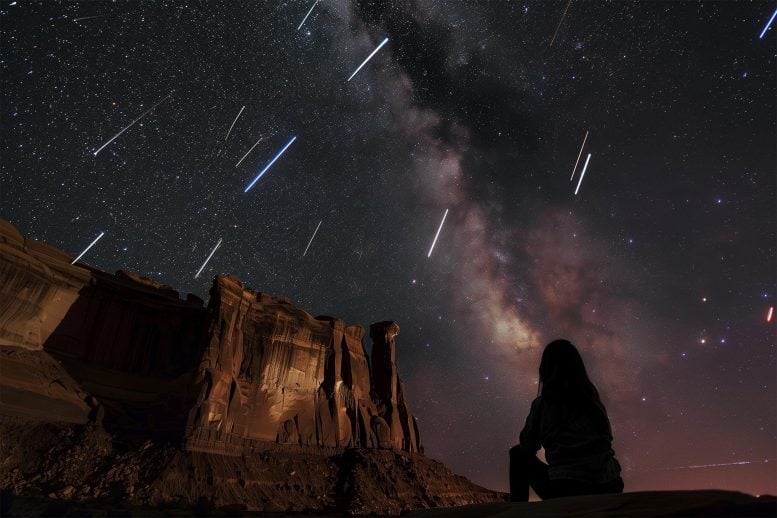
October brings several notable skywatching events, including Saturn at opposition, the Orionid meteor shower, and a close pairing of the Moon with the Pleiades, also known as the Seven Sisters.
Skywatching Highlights
- October 4: Saturn reaches opposition, making the ringed planet visible for much of the night
- October 6: A thin crescent Moon appears close to bright Jupiter before sunrise
- October 21–22: The Orionid meteor shower peaks; moonlight may interfere, so look before dawn after moonset
- October 27–28: The Moon passes near the Pleiades star cluster, also known as the Seven Sisters
Saturn will be one of October’s main attractions, while meteors from Halley’s Comet streak across the sky later in the month. The Moon will also make a close pass by the Seven Sisters. That’s What’s Up for October.
Saturn Reaches Opposition
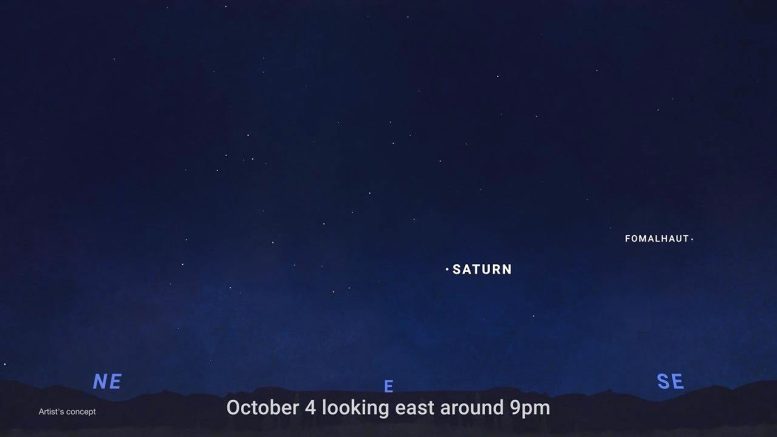
On October 4th, Saturn reaches opposition, creating one of the best viewing opportunities of the year for the ringed planet.
Opposition occurs when Earth moves between the Sun and Saturn. From our perspective, Saturn then appears on the opposite side of the sky from the Sun. As a result, the planet rises around sunset and remains visible for much of the night.
Saturn is also drawing scientific attention for activity in its atmosphere. Astronomers have known for years about the giant hexagon-shaped jet stream around the planet’s north pole, which stretches nearly 20,000 miles across.
Just last month, however, NASA’s Hubble Space Telescope detected a ten-sided atmospheric wave surrounding Saturn’s south pole. The feature in the southern hemisphere appears to be growing stronger, giving researchers an unusual chance to observe a massive atmospheric pattern as it develops.
Orionid Meteor Shower Peaks
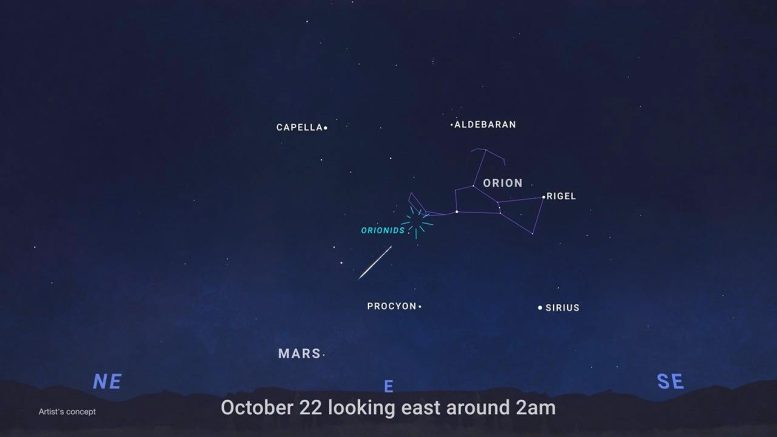
The Orionid meteor shower reaches its peak from the night of October 21st into the morning of October 22nd.
The Orionids come from small pieces of debris shed by Halley’s Comet. Although the meteors appear to originate near the constellation Orion, they can flash across any part of the night sky.
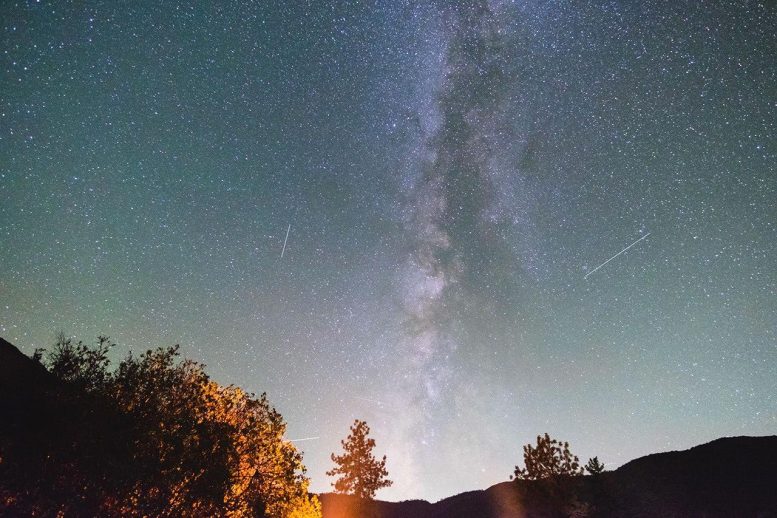
Viewing conditions will not be perfect this year because a bright waxing gibbous Moon will make some of the dimmer meteors harder to see. The best opportunity may come during the final few hours before sunrise, after the Moon has set.
For the best view, head somewhere dark, allow your eyes time to adjust, and scan as much of the sky as possible.
The Moon Meets the Seven Sisters
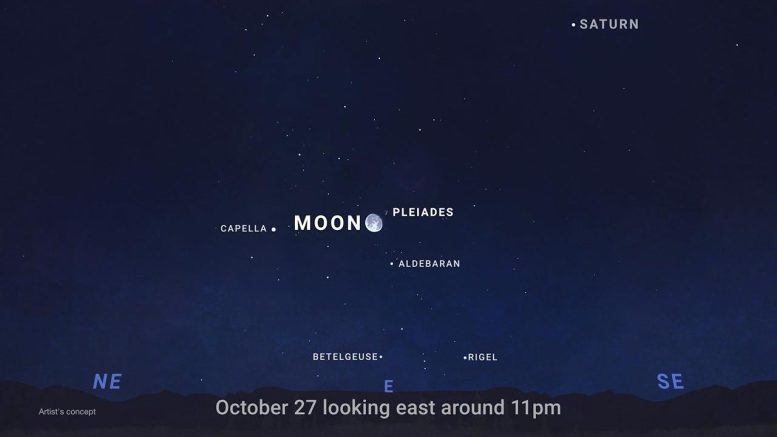
On the night of October 27th into the 28th, the Moon will pass close to the Pleiades, one of the most recognizable star clusters in the night sky.
The Pleiades are also known as the Seven Sisters. The cluster has inspired stories in many ancient cultures, in part because it can be seen from nearly every region of the world.
To find the pairing, look toward the east during the evening as the Moon and the Pleiades rise higher in the sky. To the naked eye, the Pleiades look like a faint, slightly fuzzy cluster of 6 to 7 stars.
The cluster is easy to see without optical equipment, but binoculars or a telescope can reveal far more detail and make the view even more striking.
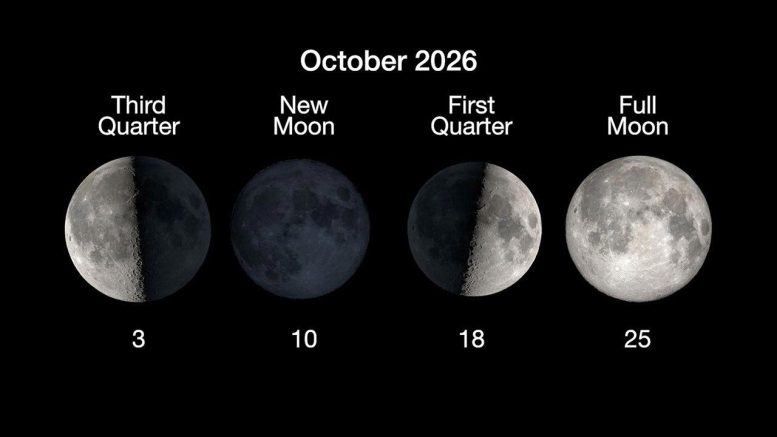
Here are the phases of the Moon for October.